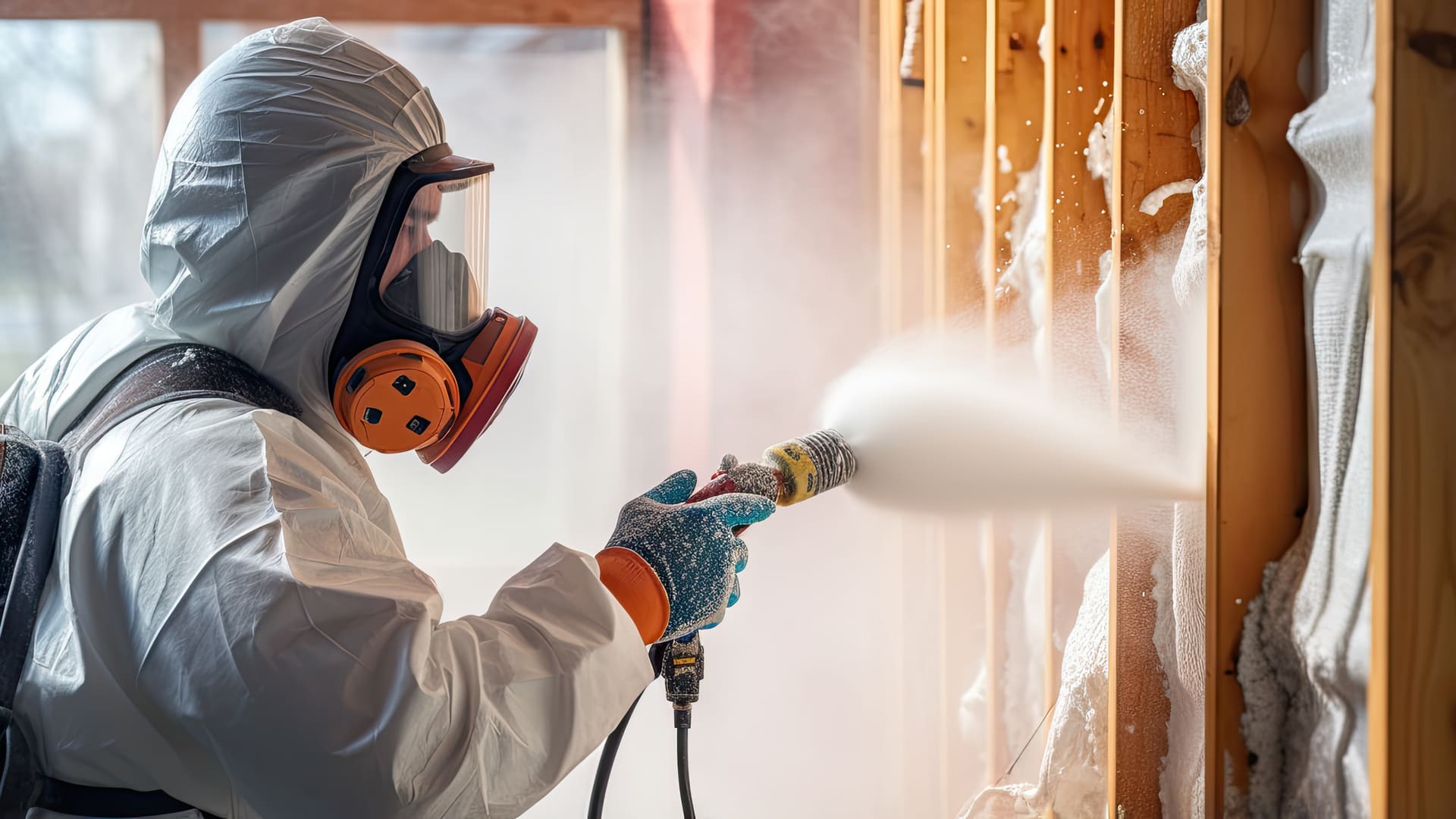
Spray Foam Insulation Toronto
Spray foam insulation contractors in Toronto. Open and closed cell foam for walls, attics, and basements. Energy-efficient, licensed installers, free estimates.
Professional Spray Foam Insulation in the GTA
Last updated:
Konstruction Group is one of the leading spray foam contractors serving Toronto and the GTA. Spray foam is our primary insulation offering - it delivers superior air sealing and thermal performance that batt insulation simply can't match. We install both closed cell and open cell spray foam for new custom homes, multiplexes, and renovation projects. Our work meets Ontario Building Code requirements, and we coordinate with your framing and mechanical trades for efficient project completion.
Spray Foam Applications
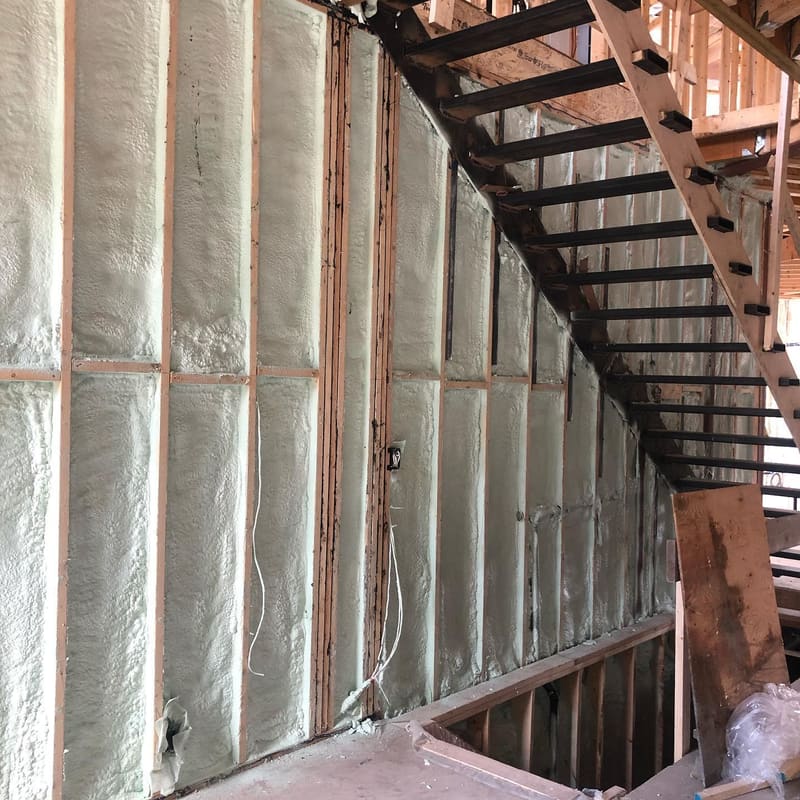
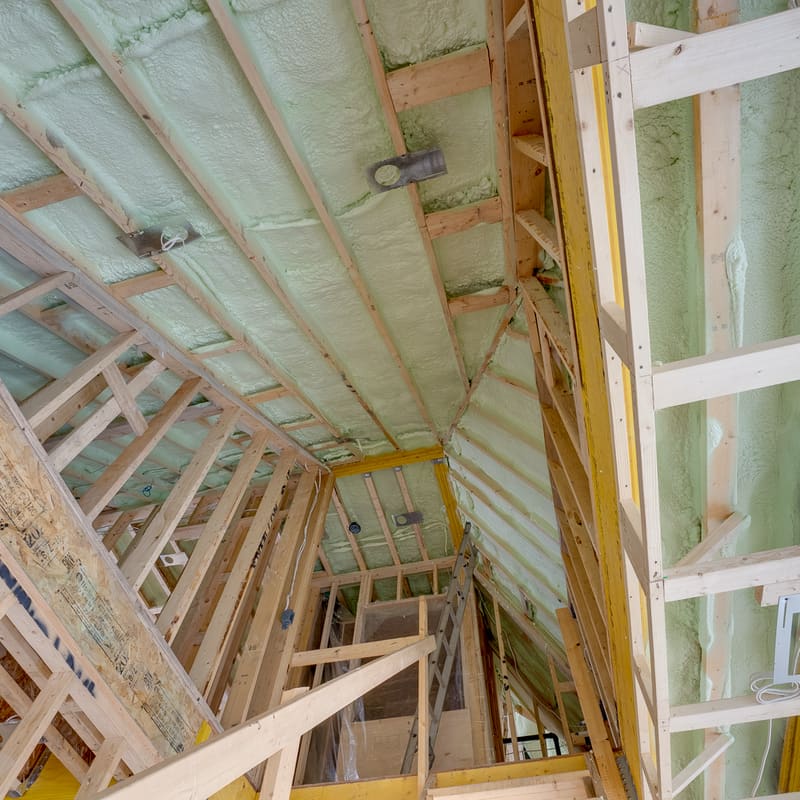
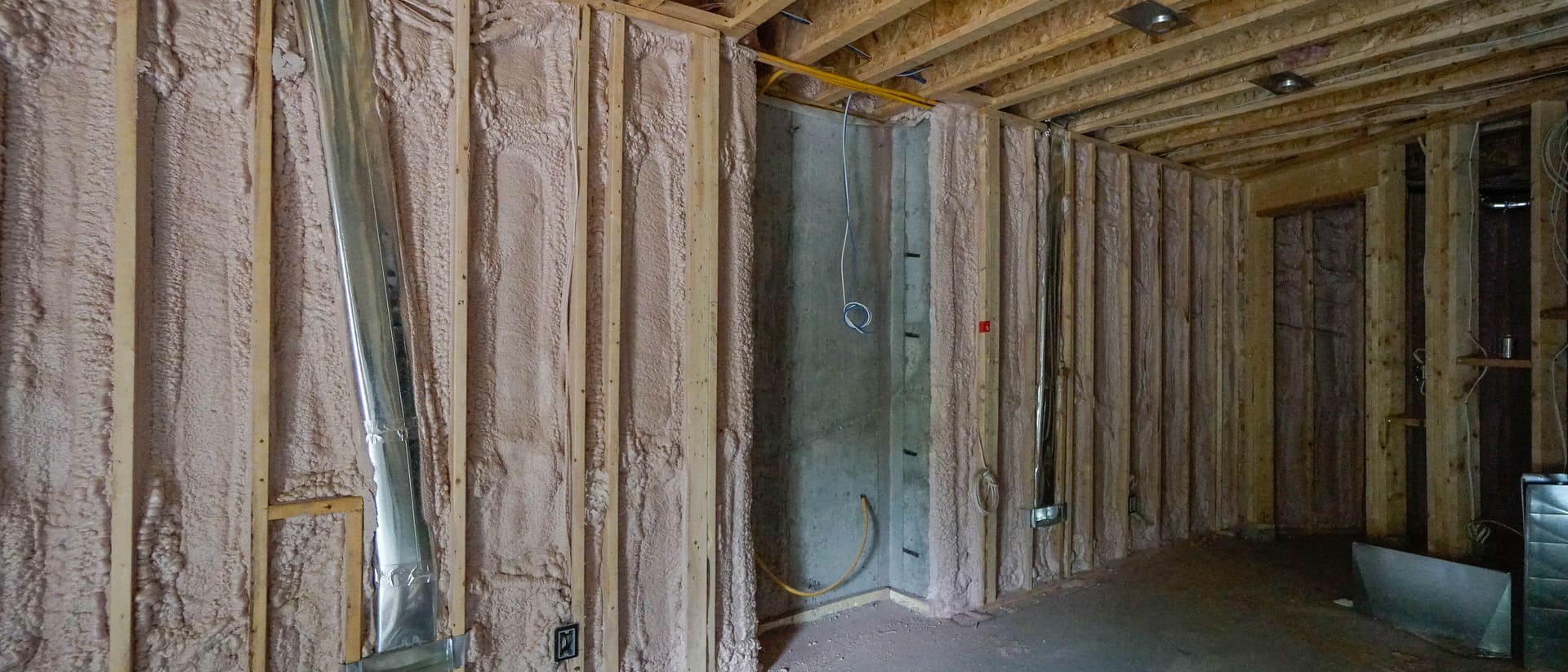
Ontario Building Code requires spray foam in several key areas where air sealing is critical. We spray basement walls, rim joists, garage ceilings, flat roofs, exposed ceilings, and cold room walls and ceilings. These areas are prone to air leakage and thermal bridging - spray foam seals them completely while providing excellent R-value.
Spray Foam Services
- Basement Walls – Closed cell spray foam directly on foundation walls for superior moisture and thermal protection
- Rim Joists – OBC-required spray foam sealing at floor system perimeters to eliminate air infiltration
- Garage Ceilings – Air sealing and insulation for garage ceilings below living spaces
- Flat Roofs – Spray foam for flat roof assemblies providing both insulation and air barrier
- Exposed Ceilings – Cathedral ceilings and exposed roof structures where spray foam provides continuous insulation
- Cold Room Walls & Ceilings – OBC-required insulation and air sealing for cold storage rooms
Closed Cell vs Open Cell Spray Foam
- Closed Cell (2-lb) – Denser, R-6.5 to R-7 per inch, acts as vapor barrier, moisture resistant - our standard for OBC compliance
- Open Cell (0.5-lb) – Softer, R-3.5 to R-4 per inch, better sound dampening, requires vapor barrier - ideal for interior applications
Detailed Comparison
| Factor | Open-Cell (0.5 lb) | Closed-Cell (2.0 lb) |
|---|---|---|
| R-Value per Inch | R-3.5–R-4.0 | R-6.5–R-7.0 |
| Cost per sq ft | $2.50–$5.00 | $4.00–$8.00 |
| Vapour Barrier | No — requires separate vapour retarder | Yes — acts as its own vapour barrier at 2" thickness |
| Air Barrier | Yes — excellent air sealing | Yes — excellent air sealing |
| Structural Rigidity | Soft, flexible foam | Rigid — adds racking strength to walls |
| Sound Dampening | Superior — absorbs sound effectively | Good — less effective than open-cell for noise |
| Moisture Resistance | Absorbs water; not for below-grade | Water-resistant; ideal for basements and crawl spaces |
| Best Applications | Interior partitions, attics, above-grade walls | Basements, exterior walls, crawl spaces, rim joists |
| Thickness Needed (R-22 wall) | 5.5–6 inches | 3–3.5 inches |
| OBC Compliance | Meets SB-12 with adequate thickness + vapour retarder | Meets SB-12; self-sufficient vapour barrier at 2"+ |
Why Spray Foam Over Batt Insulation
Spray foam expands to fill every gap, crack, and void - creating a continuous air barrier that batt insulation can't achieve. In basements, spray foam bonds directly to concrete and eliminates the need for separate vapor barriers. For rim joists and other complex areas, spray foam seals completely where batts leave gaps. The result is better energy performance and fewer comfort issues from air leakage. Our insulation work coordinates seamlessly with framing, drywall, and steel beam installation.
For General Contractors & Builders
Spray foam insulation is scheduled after framing and mechanical rough-in are complete — electrical, plumbing, and HVAC must be in place and inspected before we arrive. On a typical custom home or multiplex build, we coordinate spray foam within a 1-3 day window depending on the scope. Basement walls, rim joists, garage ceilings, and any flat roof assemblies are sprayed in sequence so the entire building envelope is sealed in one mobilization. Our crew works closely with your framing team to confirm stud cavities are clear and ready, and we flag any gaps or areas that need attention before foam goes on. Once sprayed and trimmed, the insulation must be inspected by the building inspector before drywall can proceed — we schedule our work to keep your critical path on track, not stall it. Ventilation is required during and immediately after application. We set up exhaust fans and ensure the space is safe for other trades to re-enter the following day. If you're running a multi-trade project, we can bundle spray foam with batt insulation, soundproofing, and firestopping under one insulation contract to simplify your schedule and reduce coordination overhead.
For Homeowners & Renovations
If you're finishing a basement, insulating a garage, or sealing up a drafty older home, spray foam is one of the most effective upgrades you can make. Common homeowner projects include basement wall insulation during a basement finishing project, rim joist sealing on existing homes to stop cold air infiltration, garage ceiling insulation where living space sits above, and crawl space insulation for moisture and temperature control. We work directly with homeowner-builders and renovation contractors alike. During spray foam application, the area being sprayed must be vacated — the chemicals used during installation require proper ventilation, and we recommend occupants stay out of the sprayed area for at least 24 hours. There will be a noticeable odor during and shortly after spraying, but once the foam cures fully it is completely inert. Most residential spray foam projects are completed in a single day, with trimming and cleanup done before we leave. The energy savings are significant: homeowners in Toronto typically see a noticeable reduction in heating costs after spray foaming their basement and rim joists, because those are the biggest sources of air leakage in most homes.
R-Value Requirements in Ontario
Ontario Building Code sets minimum R-value requirements for different parts of the building envelope, and spray foam is one of the most efficient ways to meet them. For basement walls, OBC requires a minimum of R-20. Above-grade exterior walls require R-22. Ceilings and attics require R-60 — typically achieved with blown-in insulation on top of spray foam at the attic hatch and rim joist areas. The advantage of closed cell spray foam is density: at R-6.5 per inch, you can achieve R-20 in roughly 3 inches of closed cell foam. Batt insulation at R-3.5 per inch would need nearly 6 inches to reach the same value — a significant difference when space is limited in basement wall assemblies or between floor joists. Spray foam also provides continuous insulation without the thermal bridging that occurs when batts are compressed or poorly fitted around wiring, pipes, and framing members. For builders working on energy-efficient designs or projects targeting better-than-code performance, we can specify higher R-values and combine spray foam with batt insulation or continuous exterior insulation to exceed OBC minimums.
Health, Safety & Indoor Air Quality
Spray foam insulation involves a two-component chemical reaction that must be handled by trained applicators with proper equipment. During application, occupants must vacate the area being sprayed, and we require a minimum 24-hour re-entry time for unprotected individuals. Our crew wears full personal protective equipment including supplied-air respirators, and we set up mechanical ventilation to exhaust fumes during and after spraying. Once fully cured — typically within 24 hours — spray foam is chemically inert and does not off-gas. It will not release volatile organic compounds into your living space, and it does not support mold growth. All foam products we use are third-party tested and certified to CAN/ULC standards. Our applicators are manufacturer-trained and follow documented installation procedures for temperature, thickness, and lift requirements. We maintain Safety Data Sheets for every product on-site and can provide them to inspectors, general contractors, or homeowners on request. If your project involves occupied spaces — such as rim joist sealing in a home where people are living — we take additional precautions to isolate the work area with temporary barriers and negative air pressure to protect indoor air quality during the application.
What We Provide vs. What You Need
- We Provide – Spray foam application (closed or open cell), surface preparation, trimming, and cleanup
- You Provide – Framing complete, electrical/plumbing rough-in complete, area clear of obstructions
Why Choose Our Spray Foam Contractors
- OBC Compliant – We know where spray foam is required and install to code
- Experienced Applicators – Trained spray foam technicians for quality application
- $10M Liability Insurance – Full coverage for closed-cell and open-cell spray foam applications
- WSIB Compliant – Workers insured for confined-space spray foam work on residential sites
- Complete Insulation Package – Spray foam plus batt, blown-in, and soundproofing
- Same-Day Rough-In – Spray foam applied and ready for inspection within your framing schedule
Our Process
1
Project Review
We review drawings and discuss spray foam requirements - basement, rim joists, garage ceiling, and other areas.
Typical timeline: 1-2 days2
Quote
Detailed pricing based on areas to be sprayed, foam type (closed/open cell), and thickness requirements.
Typical timeline: 2-4 days3
Scheduling
Coordinate timing after framing and mechanical rough-in are complete and inspected.
Typical timeline: As needed4
Site Preparation
Areas cleared and protected. Windows, fixtures, and surfaces masked as needed.
Typical timeline: 1-2 hours5
Spray Foam Application
Foam applied to specified thickness. Multiple passes for thick applications.
Typical timeline: 1-3 days6
Trimming & Cleanup
Excess foam trimmed flush with framing. Overspray cleaned. Area ready for next trades.
Typical timeline: Same dayFrequently Asked Questions
How much does spray foam insulation cost in Toronto?
Spray foam insulation typically costs $4-$8 per square foot depending on R-value (thickness) and application. Pricing varies based on coverage area, accessibility, and project scope. Basement walls, rim joists, and garage ceilings are quoted based on area. We provide detailed quotes after reviewing your project.
Where is spray foam required by Ontario Building Code?
OBC requires effective air sealing at rim joists, cold room walls and ceilings, and transitions between conditioned and unconditioned spaces. Spray foam is the most reliable way to achieve these requirements. It's also commonly specified for basement walls, garage ceilings below living space, and flat roofs.
What's the difference between closed cell and open cell spray foam?
Closed cell spray foam is denser (2 lb/cu ft), provides R-6.5-7 per inch, and acts as its own vapor barrier. Open cell is lighter (0.5 lb/cu ft), provides R-3.5-4 per inch, and requires a separate vapor barrier. We use closed cell for most OBC-required applications and basement walls. Open cell is suitable for interior applications where vapor permeability is acceptable.
Can you spray foam an existing basement?
Yes, we spray foam existing basement walls as part of basement finishing projects. The concrete must be clean and dry. Spray foam bonds directly to concrete, providing insulation and moisture protection without the need for separate vapor barriers or strapping in many cases.
How long does spray foam take to cure?
Spray foam is tack-free within minutes and fully cured within 24 hours. The space should be ventilated during and after application. We can trim excess foam and other trades can work in the area typically the next day. We coordinate timing with your project schedule.
Do you also install batt insulation?
Yes, we provide complete insulation services including spray foam, batt insulation for exterior walls, blown-in for attics, and soundproofing. Many projects use spray foam for specific OBC requirements and batts for general wall insulation. We quote the appropriate combination for your project.
Get a Free Quote
Contact us today for a free consultation and estimate on your project.
Request Quote Online(416) 901-6020Service Areas
• Toronto• North York• Scarborough• Etobicoke• York• East York• Mississauga• Brampton• Vaughan• Richmond Hill• Markham• Oakville• Burlington• Milton• Ajax• Pickering• Whitby• Oshawa• Newmarket• Aurora• King City• Caledon
Related Searches
spray foam insulationspray foamspray foam insulation torontoclosed cell spray foamopen cell spray foam
Related Insulation Services
Batt Insulation
Batt insulation installation in Toronto. Fiberglass and Rockwool for walls, attics, and basements. R-value guidance, licensed installers, free estimates.
Attic Insulation
Attic insulation services in Toronto. Blown-in, batt, and spray foam options. Reduce heat loss, lower energy bills. Licensed contractors, free estimates.
Soundproofing
Soundproofing insulation for walls, ceilings, and floors in Toronto. Acoustic batts, spray foam, and resilient channels. Licensed installers, free quotes.
Ready to Get Started?
Contact Konstruction Group today for professional spray foam services in Toronto and the GTA.
Get a Free Quote