Quick Answer
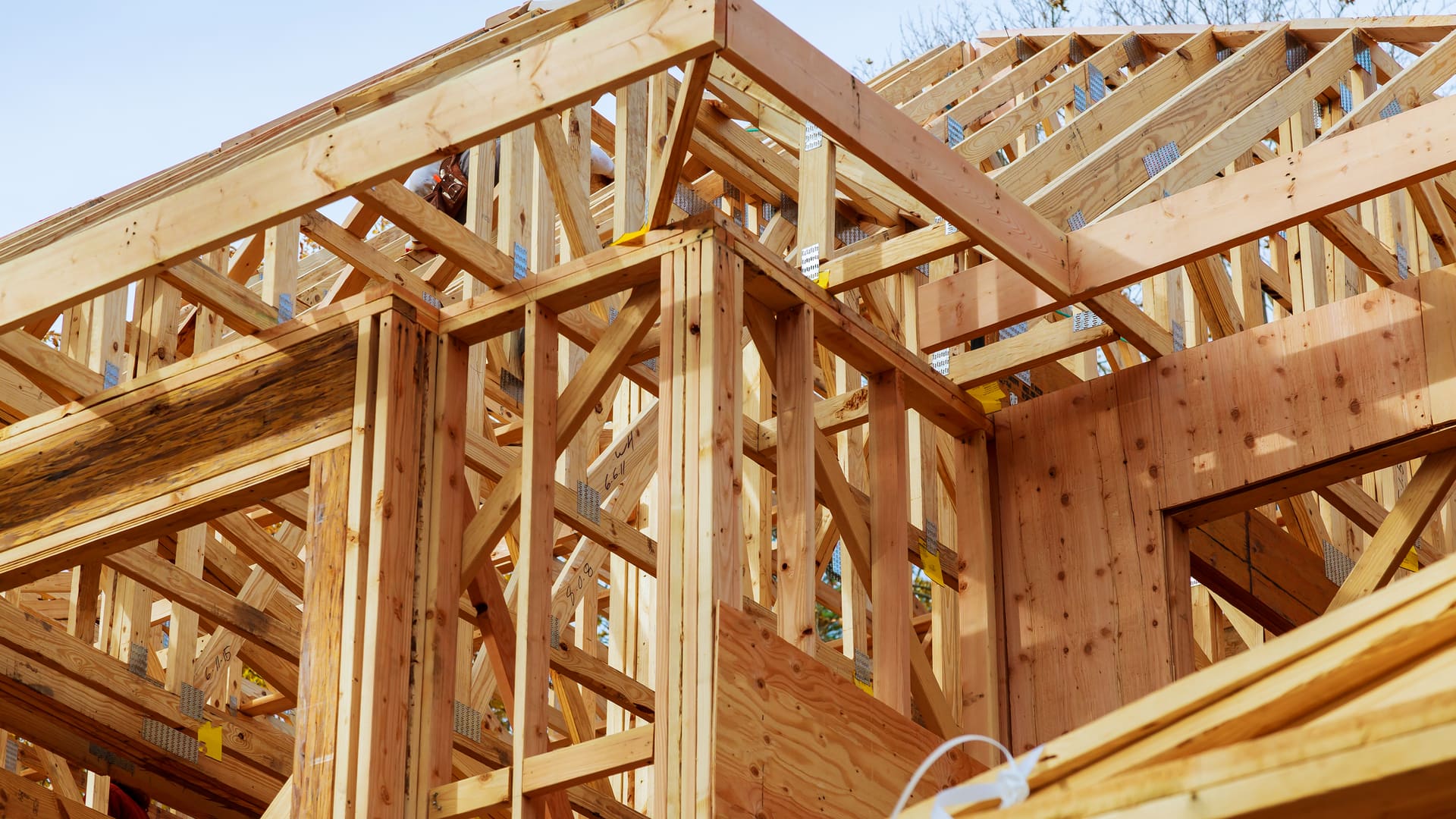
Wood studs (2x4 SPF) are 5–15% cheaper for partitions and structural in residential. Metal studs (cold-formed steel, typically 25-gauge for partitions) are non-combustible, dimensionally stable, and dominate commercial fit-outs and fire-rated multi-residential. Wood for single-family residential; metal for commercial and multi-unit.
Metal studs (cold-formed steel) and wood studs (typically SPF lumber) both frame walls, but contractors pick them for different reasons. Wood remains the default for residential single-family construction in Ontario; metal dominates commercial fit-outs, fire-rated assemblies, multi-unit residential, and projects where straight, dimensionally stable studs matter more than load-bearing capacity. This guide compares both on cost, strength, fire resistance, install speed, and the specific GTA scenarios where each is correct.
Metal Stud vs Wood Stud — Side by Side
Wood is structural — it carries roof, floor, and seismic loads. Standard cold-formed metal studs (25-gauge for non-load-bearing partitions) carry no vertical load. Heavier-gauge structural metal studs (16-gauge and lower) exist but cost significantly more and require an engineered design.
| Factor | Wood Stud (2x4 SPF) | Metal Stud (25 ga, 3-5/8") |
|---|---|---|
| Cost per stud (GTA, 2026) | $5–$8 | $6–$9 |
| Cost per linear foot of wall (supplied + framed) | $10–$16 | $12–$19 |
| Structural / load-bearing | Yes — standard | No — partition only (25 ga) |
| Dimensional stability | Warps with humidity | No warping or shrinkage |
| Fire resistance (in 1-hr assembly) | Achievable | Easier — non-combustible |
| Insect damage risk | Real (carpenter ants, termites) | None |
| Mould risk in damp areas | Real | None (non-organic) |
| Drywall fastening | Easy — screw direct | Easy — screw direct |
| Service penetrations (wiring/plumbing) | Drill required | Pre-punched knockouts |
| Ease of demolition / re-config | Moderate | Easier (lighter, screw-only) |
When Wood Studs Are the Right Choice
Wood is the default for residential single-family construction in Ontario for several concrete reasons:
- load-bearing — wood handles vertical loads from above with code-defined sizing that most crews know by memory
- cost and availability — every lumber yard in the GTA stocks 2x4, 2x6, and engineered LVL without lead time
- labour pool — framing crews across the GTA train on wood, so qualified help is easier to source
- natural connection to wood floor systems — no transition hardware needed
- lower thermal conductivity than steel — wood reduces thermal bridging through the wall cavity
- cheaper overall for typical residential cavity assemblies.
For new homes, additions, garden suites, and most basement renovations, wood remains the correct choice.
When Metal Studs Are the Right Choice
Metal studs are the better choice when:
- commercial or industrial fit-outs require non-combustible framing under building code, insurance, or tenant lease terms
- fire-rated separations between dwelling units in townhouses and multi-unit residential buildings demand UL/ULC-rated assemblies that metal simplifies
- wet areas — post-flood basement remediation, pool enclosures, or commercial kitchens benefit from framing that won't rot or mould
- tall walls over 12 feet stay straighter with cold-formed structural metal studs than with wood
- dimensional stability is a priority — metal eliminates seasonal warping
- high-rise multi-residential projects, where the 2024 OBC amendments reinforce non-combustible interior framing requirements above certain building heights
- shop-fabricated assemblies — metal panels can be prefabricated into modules off-site.
On long, repetitive commercial runs, metal install is faster. A GTA fit-out crew can frame 1,000 sq ft of metal stud partition per day; wood crews typically reach 600–800 sq ft.
Cost Comparison Across Project Types
Wood runs 5–15% cheaper than metal on a per-square-foot basis for typical partition walls. That gap reverses on large commercial runs, where metal's faster install pace offsets the higher material cost. Labour rates in Toronto rose roughly 8% between 2024 and 2026, which makes install speed a more meaningful factor in total cost than it was two years ago.
| Project | Wood total (supplied + installed) | Metal total (supplied + installed) |
|---|---|---|
| 1,000 sq ft basement partition framing | $6,000–$10,500 | $6,500–$11,500 |
| Commercial 5,000 sq ft fit-out | $34,000–$62,000 | $31,000–$54,000 (faster crew rate) |
| Townhouse fire-rated party wall (linear ft) | $52–$85/ft | $46–$74/ft (simpler UL rating) |
| Single 12×12 room partition | $800–$1,400 | $850–$1,500 |
OBC and Code Considerations
The Ontario Building Code treats both wood and metal as approved framing materials. Differences emerge in three areas: Part 9 residential builds (wood is overwhelmingly used and well-supported in the code); Part 3 commercial and multi-unit residential (non-combustible construction is mandatory above certain building heights, a threshold reinforced by 2024 OBC amendments); and fire-rated assemblies (UL/ULC ratings for metal-stud walls are more numerous and often simpler to specify than equivalent wood-stud assemblies).
For any wall taller than 10 feet, or in any commercial or industrial context, commission an engineered design. Cold-formed structural metal stud framing is governed by AISI S100 in North America, and the wrong gauge or stud spacing will fail inspection.
More Resources
Sources & Methodology
Cost figures and crew productivity rates based on Konstruction Group’s 2024–2026 GTA framing projects across residential, multi-unit, and commercial fit-outs. Cold-formed steel sizing per AISI S100-16 North American Specification.

Researched & reviewed by
Fadi MamarCo-founder, Konstruction Group Inc
Engineering graduate from Toronto Metropolitan University with 14+ years in Toronto construction. Has overseen 500+ residential and commercial framing, insulation, and drywall projects across the GTA.
LinkedIn ProfileExplore Our Services
Ready to Start Your Project?
Contact Konstruction Group for a free consultation and quote.
Get a Free Quote