Quick Answer
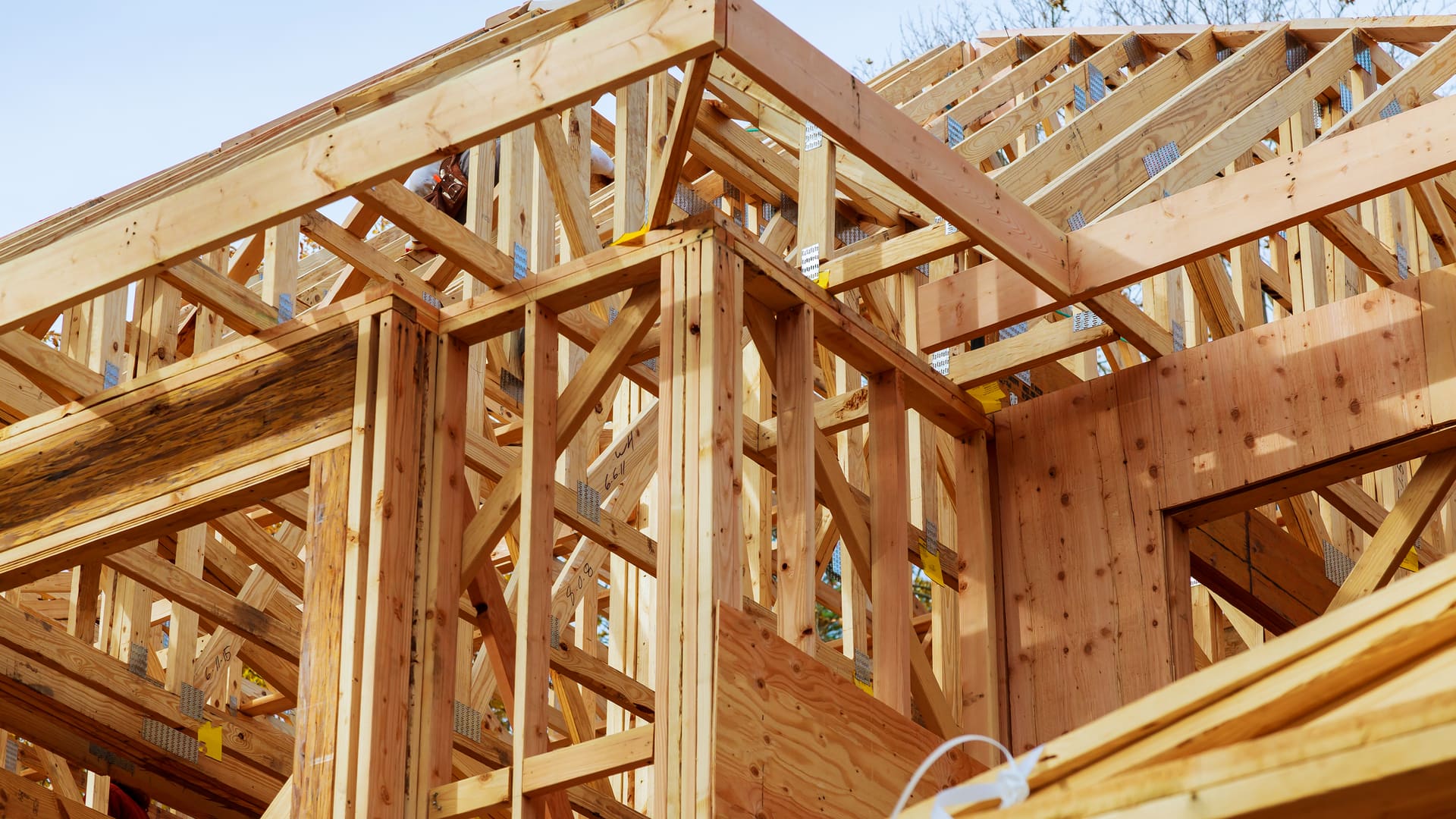
Back framing (drywall backing) is the extra lumber installed inside walls and ceilings to provide solid fastening points for drywall, trim, cabinets, towel bars, grab bars, and mounted TVs. Standard residential back framing covers inside corners, ceiling drywall edges, kitchen cabinet locations, and bathroom fixture areas — adds 1–2 days to a typical framing job.
Back framing (sometimes called backing, drywall backing, or nailer blocks) is the additional lumber installed inside walls and ceilings to give drywall, trim, cabinets, and fixtures something solid to fasten into. It happens at the end of framing and the start of drywall, and skipping it makes the next trades' work harder. This guide covers where back framing goes, why it matters, and the typical Ontario residential back framing scope as of 2026.
What Back Framing Is
Standard wall framing is studs at 16" o.c. on plates. That gives drywall a fastener every 16", fine for the field of a wall.
Several locations need more support:
- inside corners where two walls meet, drywall on one wall needs backing on the adjacent wall to anchor
- ceilings where drywall edges land between joists, a joist running parallel to the drywall edge means no backing without added blocking
- anywhere a heavy fixture will hang, towel bars, grab bars, mounted TVs, kitchen cabinets, vanity mirrors
- wall openings, extra cripple studs and trimmer studs around doors and windows
- stairwell handrails, backing inside walls where rail brackets attach.
Back framing is the lumber added at all these points so the next trade has wood (or steel-stud equivalents) within their fastener reach.
Why It Matters
Two practical reasons back framing matters:
- drywall hangs cleanly, without inside-corner backing or correctly-spaced ceiling backing, drywall corners crack within months as the unsupported edge flexes
- future fixtures install cleanly, knowing where backing is means a homeowner can hang a heavy mirror, install a grab bar, or mount a TV without fishing for studs.
Every experienced GTA framing contractor includes a back-framing pass after the wall and ceiling framing is complete. Under the 2026 Ontario Building Code, backing at grab bar locations in bathrooms is a recommended best practice for accessible design in new residential construction. We mark backing locations on the drywall side of every stud and joist where extra support was added so the homeowner has a reference photo before drywall covers it.
Common Back-Framing Locations in a Residential Build
Standard backing scope in a typical GTA new build or renovation:
- all inside corners (wall-to-wall and wall-to-ceiling)
- ceiling drywall edge support, blocking between joists where joists run parallel to wall
- above all upper kitchen cabinet locations (continuous 2x6 backer at typical cabinet hang height)
- in all bathrooms, towel bar, grab bar, vanity, mirror, and shower fixture locations
- above tubs and showers for grab bar future-proofing
- at all door and window openings (king studs, trimmers, cripples, header backing)
- at all stair handrail bracket locations
- above and below windows for proper drywall corner support
- at any future TV mount locations identified by the homeowner.
Lumber prices across the GTA stabilised through late 2025 and into 2026, but dimensional lumber costs remain above pre-2020 levels. Budget accordingly when pricing a back-framing scope. A solid back-framing pass adds one to two days to a typical residential framing schedule.
More Resources
Sources & Methodology
Back-framing scope reflects Konstruction Group’s standard residential framing practices across 500+ GTA projects 2010–2026. OBC fire-blocking requirements per Part 9.10.
Researched & reviewed by
Fadi MamarCo-founder, Konstruction Group Inc
Engineering graduate from Toronto Metropolitan University with 14+ years in Toronto construction. Has overseen 500+ residential and commercial framing, insulation, and drywall projects across the GTA.
LinkedIn ProfileExplore Our Services
Ready to Start Your Project?
Contact Konstruction Group for a free consultation and quote.
Get a Free Quote