Quick Answer
Rigid foam (XPS, EPS, polyiso) installs as boards at $2.50–$4.00/sq ft and excels at continuous exterior insulation. Closed-cell spray foam at $3.50–$6.00/sq ft fills irregular cavities and seals air leaks. Rigid for exterior continuous and below-grade foundations; spray foam for interior cavities and rim joists.
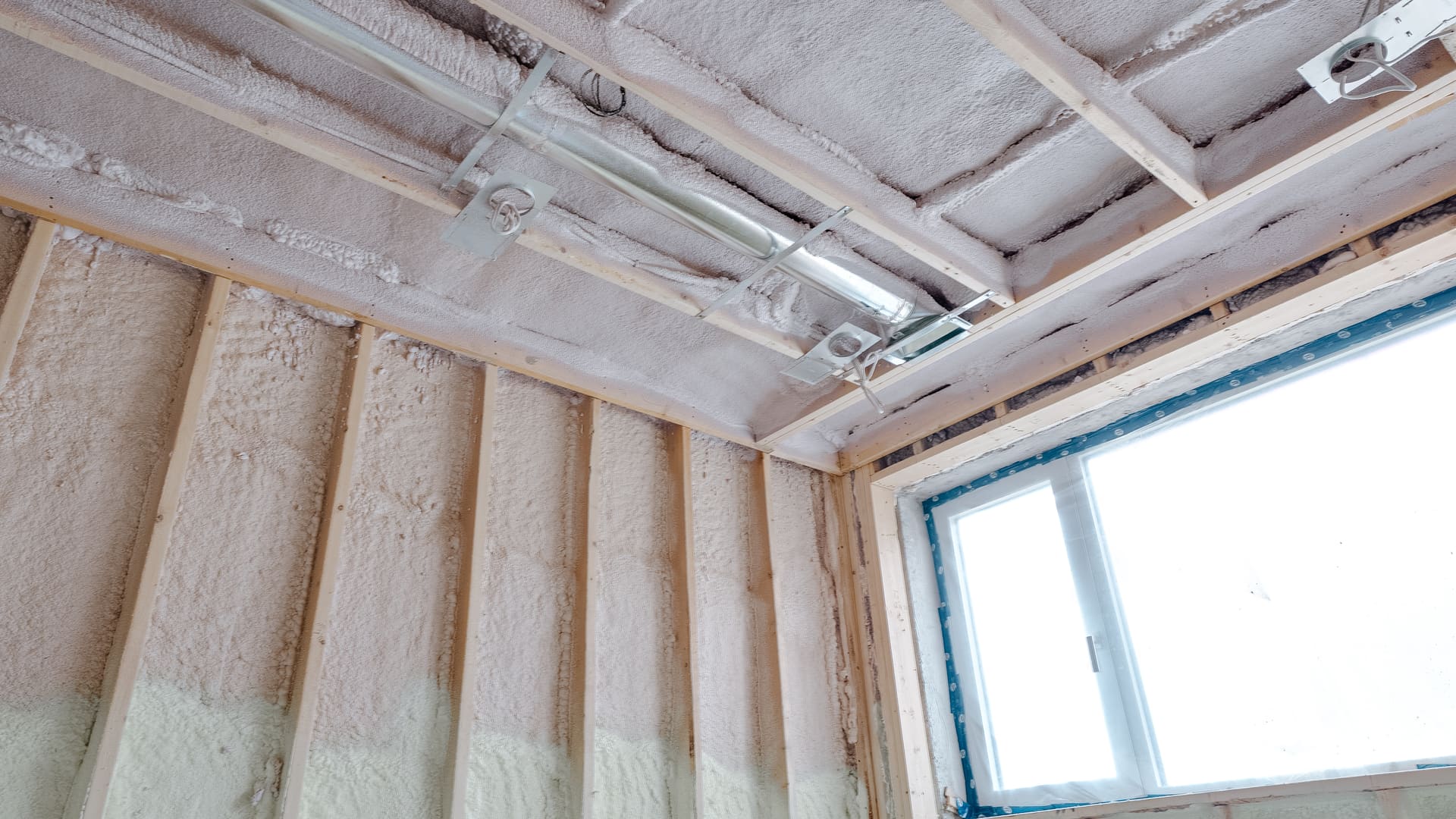
Rigid foam (XPS, EPS, polyiso) and spray foam (open-cell, closed-cell) are both polymer-based insulations that outperform fibrous insulations on R-value per inch. The difference: rigid foam comes in pre-formed boards installed by hand, spray foam is liquid that expands into place. Both have specific Ontario assemblies where they win. This guide compares both on R-value, cost, install requirements, and the right pick for typical GTA basements, exterior walls, and roofs.
Rigid Foam vs Spray Foam — Side by Side
Rigid foam comes in three common products: XPS (extruded polystyrene, blue/pink), EPS (expanded polystyrene, white beadboard), and polyiso (yellow foil-faced). Spray foam comes in two: open-cell (0.5 lb) and closed-cell (2 lb).
| Factor | Rigid Foam (Polyiso, 2") | Closed-Cell Spray Foam (2") |
|---|---|---|
| R-value per inch | R-6.0–R-6.5 | R-6.5 |
| Cost installed (GTA 2026) | $2.50–$4.00/sq ft for 2" | $3.50–$6.00/sq ft for 2" |
| Air barrier (typical install) | Yes if seams taped | Yes (continuous) |
| Vapour barrier | Polyiso: yes (foil); XPS: yes; EPS: no | Yes |
| DIY-friendly | Yes (board, can be cut on site) | No (licensed installer) |
| Conforms to irregular cavities | Poor (board needs to fit flat) | Excellent (expands) |
| Continuous insulation (over framing) | Excellent — common application | Possible but less common |
| Removable for renovations | Easy | Hard |
| Above-grade exterior application | Common | Less common |
| Below-grade exterior application | XPS standard; polyiso not OK | Closed-cell OK |
When Rigid Foam Wins
Rigid foam is the better choice when:
- continuous exterior insulation over framing — XPS or polyiso boards installed over wall sheathing reduce thermal bridging through studs and is increasingly required for high-performance Ontario builds (Net Zero, Passive House, R-2000)
- below-grade foundation exterior — XPS bonded to the outside of the foundation wall is the gold-standard basement insulation method
- flat roof above-deck — polyiso is the dominant commercial flat roof insulation
- DIY budget retrofits — rigid foam can be screwed and taped by an experienced homeowner
- under concrete slabs — XPS is the only insulation rated for direct concrete contact in below-grade applications.
For exterior insulation continuous over framing, rigid foam is essentially the only practical option.
When Spray Foam Wins
Spray foam wins when:
- cavity is irregular — basement walls with stone foundations, rim joists, attic transitions, cathedral ceilings
- air sealing is the priority — closed-cell foam continuously seals every gap, fastener hole, and crack
- tight cavities — 2x4 walls hitting R-22 require closed-cell foam at depth, where rigid board can't fit
- retrofits with limited access — small basement crawl spaces and rim joists are easier to spray than to cut and install rigid board
- one-pass insulation + air + vapour — closed-cell delivers all three, eliminating separate poly sheet and tape labour.
For irregular cavities and air sealing, spray foam beats rigid foam on labour even though material cost is higher.
Cost Comparison Across Common GTA Applications
Rigid foam is generally cheaper on flat, regular surfaces; spray foam catches up on irregular cavities where the labour to fit rigid board accurately exceeds the spray premium.
| Application | Rigid foam typical | Closed-cell spray foam typical |
|---|---|---|
| 1,000 sq ft basement walls (R-20) | $2,500–$4,000 (XPS 4") | $3,500–$6,000 (3") |
| Exterior continuous over 2,500 sq ft walls (R-10) | $8,000–$13,000 (polyiso 1.5") | $15,000–$25,000 |
| Rim joist perimeter (200 lin ft) | $600–$1,200 (XPS cut to fit) | $1,500–$3,000 |
| Flat roof 2,000 sq ft (R-30) | $6,000–$10,000 (polyiso) | $12,000–$20,000 |
| Below-slab 1,500 sq ft (R-10) | $3,000–$5,500 (XPS) | Not recommended below slab |
Hybrid Approaches Are Common
Many high-performance Ontario builds use both. A typical approach: closed-cell spray foam against the structural element (interior of basement wall, underside of roof deck) for air and vapour control, then rigid foam continuous over framing for thermal bridging. This combines spray foam's air sealing with rigid foam's continuous coverage.
For basement walls specifically, the standard approach in GTA new builds is: 2-3" closed-cell spray foam directly against the concrete (vapour control + air seal), then a 2x4 stud wall with batt fill for total cavity R-22+. This eliminates separate vapour barrier work and gives basement walls that perform like they're above grade.
More Resources
Sources & Methodology
R-value and cost figures from CCMC-evaluated product data and Konstruction Group’s 2024–2026 GTA insulation project pricing. Hybrid assembly recommendations reflect projects built to ENERGY STAR and Net Zero Ready standards.

Researched & reviewed by
Fadi MamarCo-founder, Konstruction Group Inc
Engineering graduate from Toronto Metropolitan University with 14+ years in Toronto construction. Has overseen 500+ residential and commercial framing, insulation, and drywall projects across the GTA.
LinkedIn ProfileExplore Our Services
Ready to Start Your Project?
Contact Konstruction Group for a free consultation and quote.
Get a Free Quote