Quick Answer
Wood framing is 30–50% cheaper than steel for typical residential spans up to 24 feet. Steel beams (W-shape, HSS) take over for spans over 24 feet, heavy point loads, multi-storey commercial, or anywhere wood capacity tops out. Most GTA custom homes use both — wood for walls, steel for the few large spans.
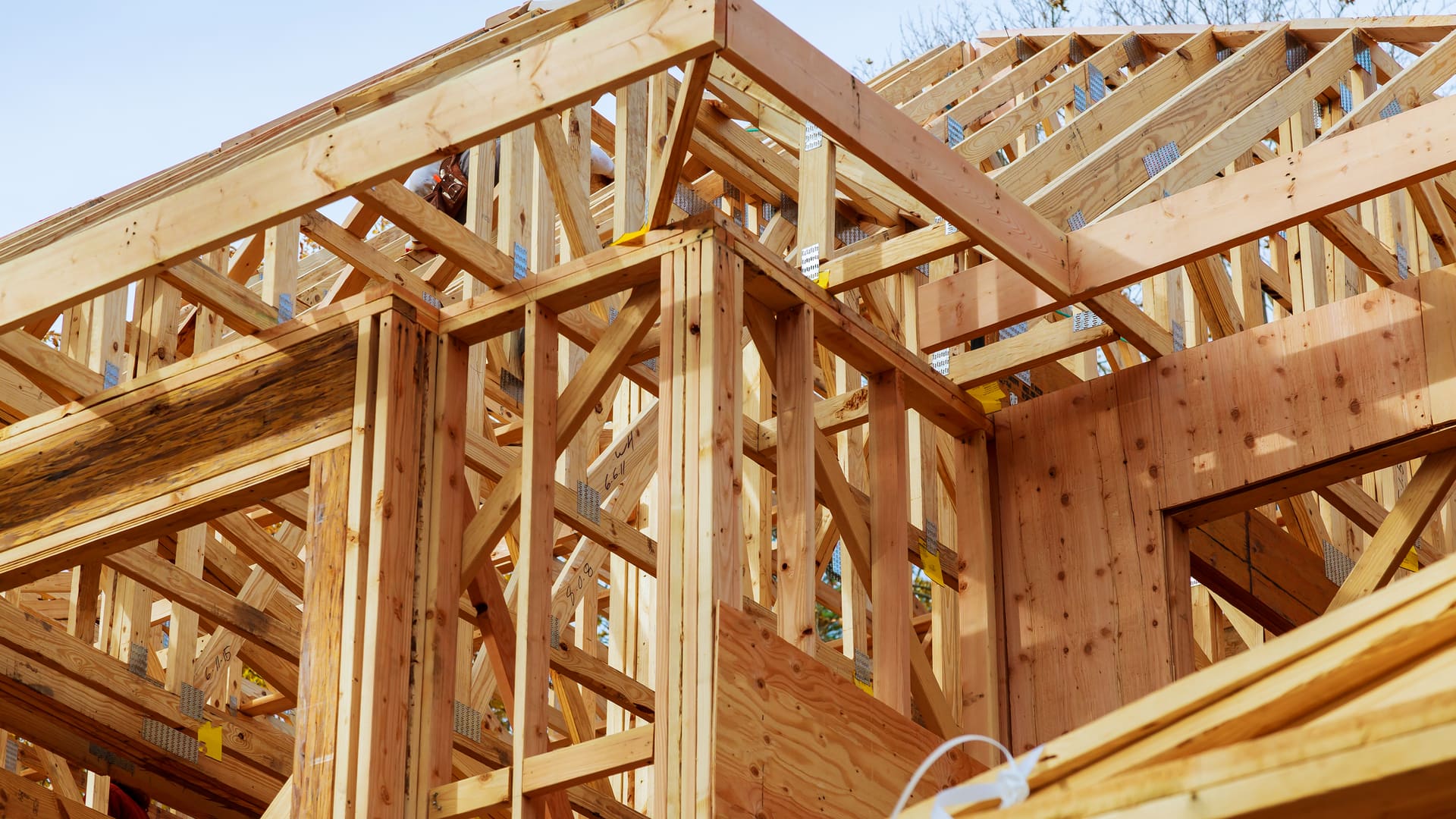
Wood (dimensional lumber, engineered LVL, parallam) and steel (W-shape beams, HSS columns, cold-formed studs) both frame buildings, but they're picked for different jobs. Wood frames roughly 95% of GTA single-family residential. Steel takes over for long spans, heavy loads, multi-storey commercial, and any project where the architecture demands beam sizes that wood can't deliver. This guide compares both on cost, structural capacity, fire rating, and the specific scenarios in Ontario where each is correct.
Wood vs Steel — Side by Side
Steel is roughly 4x stronger than wood per pound but costs 2-3x more per linear foot of beam. The choice usually comes down to span and load — at certain span lengths, no wood beam is large enough, and steel becomes the only option.
| Factor | Wood (LVL or Solid Lumber) | Steel (W-shape, HSS) |
|---|---|---|
| Cost per linear foot of beam (supplied + installed) | $25–$80 | $80–$200 |
| Maximum practical span (typical residential) | 20–24 feet (LVL) | 30–60+ feet |
| Cost per sq ft (full residential frame) | $14–$24 | $25–$45 |
| Strength per inch of depth | Lower | 4–5x higher |
| Fire resistance (raw) | Burns; 1-hr rating via drywall | Doesn't burn but loses strength at 550°C; needs fireproofing |
| Connections | Nails, screws, hangers | Bolted or welded |
| Trade pool in GTA | Hundreds of crews | Fewer crews; CWB-certified welders |
| Speed of erection | Stick-built typical | Faster on long spans, slower on short |
| Renovate / modify later | Easy | Hard (welding required) |
When Wood Wins
Wood is the default for residential single-family construction across Ontario for good reasons:
- cost — wood framing is 30-50% cheaper than equivalent steel for typical residential spans
- every framing crew in the GTA is trained on wood — unlimited labour pool
- cheap and abundant — every lumber yard stocks 2x4, 2x6, LVL, and parallam
- easy to modify — homeowners and renovators can re-cut, re-nail, and re-attach without specialized trades
- better thermal performance — wood has lower thermal conductivity than steel, reducing thermal bridging
- excellent in residential spans — engineered LVLs handle 18-24' beams which covers most residential needs
- lighter — wood requires less crane time on site and lighter foundations.
For new builds, additions, garden suites, and basement framing, wood is correct.
When Steel Wins
Steel is necessary when:
- span exceeds 24 feet — open-concept main floor with no interior walls, large family rooms, or basement renovations removing multiple bearing walls all push beyond LVL capacity
- load exceeds wood capacity — second storey above two-bay garage, heavy roof systems, or commercial floor loads
- commercial or industrial fit-outs — non-combustible framing is often required by code or insurance
- multi-storey buildings — high-rises and most multi-unit residential above 4 storeys require steel or concrete
- tight ceiling height — steel beams achieve the same load capacity in less depth than wood, preserving headroom
- point loads from columns above — steel concentrates load better than wood at column-to-beam connections.
Most GTA custom homes have 2-4 steel beams in them — typically opening up the main floor or supporting the second storey above the garage.
Cost Comparison Across Project Scopes
Steel premium gets quoted as a percentage of total framing cost. For typical residential projects, steel usually adds 8-15% to the framing line item — concentrated on a few high-demand structural elements rather than the whole building.
| Project type | Wood total framing | Steel total framing |
|---|---|---|
| Standard 2,500 sq ft new home | $35,000–$60,000 | $70,000–$110,000 |
| Same home, hybrid (wood + 4 steel beams) | +$8,000–$15,000 over pure wood | — |
| Open-concept renovation (remove 2 walls) | Cannot — wood can't span | $8,000–$18,000 (steel beam + columns) |
| 20-foot residential garage opening | $3,000–$5,500 (LVL) | $5,500–$9,000 (W-shape) |
| 30-foot commercial open span | Cannot — exceeds wood | $12,000–$25,000 |
OBC and Engineering Requirements
Both wood and steel are approved framing materials under the Ontario Building Code. Standard residential wood framing falls under Part 9 with prescriptive sizing tables — no engineer required for typical assemblies. Engineered wood (LVL, parallam, glulam) and all structural steel require a P.Eng-stamped design.
For any beam over 12 feet of clear span, any column carrying more than one floor of load, or any composite wood-steel assembly, an engineer's stamp is required and the City building department will not issue a permit without it. CWB (Canadian Welding Bureau) certification is required for any welded steel connection in Ontario.
More Resources
Sources & Methodology
Cost ranges and span limits reflect Konstruction Group’s 2024–2026 GTA framing projects, with engineered design from licensed P.Eng partners. Steel fabrication costs based on CWB-certified shop pricing.

Researched & reviewed by
Fadi MamarCo-founder, Konstruction Group Inc
Engineering graduate from Toronto Metropolitan University with 14+ years in Toronto construction. Has overseen 500+ residential and commercial framing, insulation, and drywall projects across the GTA.
LinkedIn ProfileExplore Our Services
Ready to Start Your Project?
Contact Konstruction Group for a free consultation and quote.
Get a Free Quote