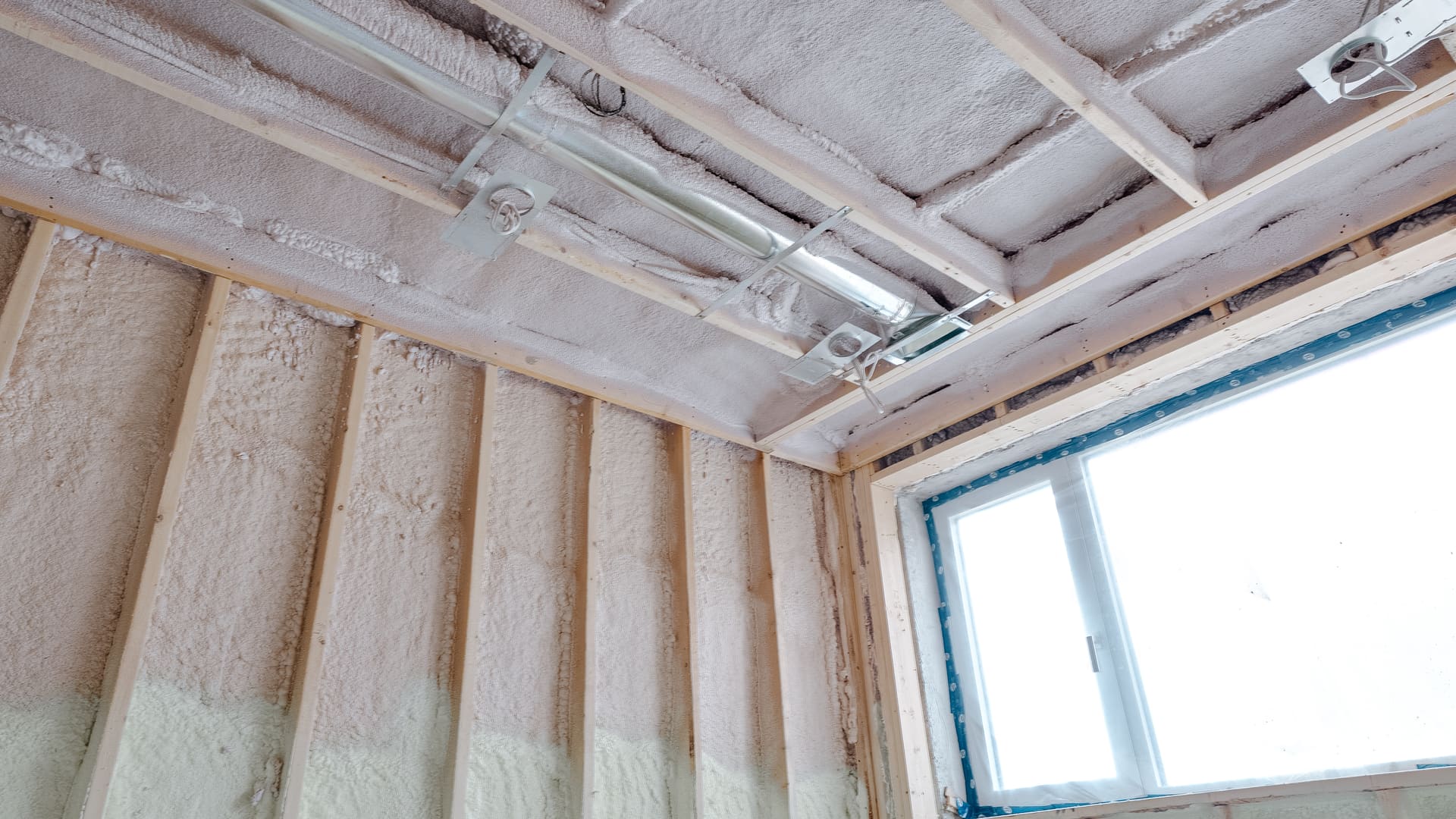
Mineral wool (Rockwool, Roxul, Thermafiber) and fiberglass batt (Owens Corning, Johns Manville, Knauf) both fill stud cavities with fibrous insulation, but they are made differently and perform differently in fire, water, and sound. Mineral wool is spun from molten rock or slag and is denser, hydrophobic, and non-combustible above 1,000°C. Fiberglass is spun from molten glass, is lighter and cheaper, and softens above 540°C.
For most Ontario walls and attics either product meets code, but the right pick depends on what you are insulating against.
Numbers reflect 2026 GTA pricing from Konstruction Group projects.
Mineral Wool vs Fiberglass — Side by Side
R-value per inch is close on modern products. The real differences are density, fire behaviour, and how each product handles water and sound.
| Property | Mineral Wool (R-22 batt) | Fiberglass (R-22 batt) |
|---|---|---|
| R-value per inch | R-3.7 to R-4.3 | R-3.0 to R-3.7 (modern HD: R-3.7) |
| Density | 1.7 to 2.5 lb/ft³ | 0.5 to 1.0 lb/ft³ |
| Cost installed (GTA, 2026) | $1.60 to $2.65/sq ft | $0.85 to $1.50/sq ft |
| Fire resistance | Non-combustible above 1,000°C | Softens above 540°C |
| Sound rating (2x6 wall, both batts) | STC 45–48 | STC 39–42 |
| Water behaviour | Hydrophobic, drains and dries | Absorbs and holds water |
| Mould risk in damp areas | Low (no organic content) | Higher when wet |
| Friction fit in stud bay | Holds shape, no staples needed | Sags without staples |
| Cuts and trims | Knife or saw, dust mask | Knife, dust mask |
| Itch / skin irritation | Lower | Higher (fine glass fibres) |
When Mineral Wool Wins
Mineral wool is the right pick in these situations:
- party walls between dwelling units in a multiplex, townhouse, or basement apartment, where the density adds 5 to 8 STC points over fiberglass, the difference between hearing your neighbour's TV and not
- mechanical rooms, boiler closets, and any cavity within 6 inches of a chimney, vent, or recessed light fixture, where the Ontario Building Code (OBC) requires non-combustible products in many fire-separation assemblies
- basement perimeter walls where bulk water is a risk, since the hydrophobic fibres drain and dry without losing R-value or growing mould.
It also fits: (4) commercial or institutional projects that require ULC fire ratings on assemblies; (5) home theatres, music rooms, and other sound-sensitive partitions; (6) bathrooms and kitchens with vapour exposure.
Where fire, water, or sound matter more than budget, choose mineral wool.
When Fiberglass Wins
Fiberglass is the right pick in these situations:
- standard above-grade walls in a single-family home, where modern high-density batts reach R-22 in a 2x6 cavity for about half the cost of mineral wool
- attic flat ceilings using blown loose-fill, the cheapest path to R-60, installed in hours
- renovations on a tight budget where the cavity is not sound-sensitive or fire-critical.
It also fits: (4) DIY work, since fiberglass is more forgiving for first-time installers; (5) rim joists and floor cavities away from below-grade exposure.
For 60 to 70% of typical GTA residential cavity insulation, fiberglass at modern R-22 spec is adequate and meaningfully cheaper.
Cost Comparison Across Common GTA Projects
Material cost runs roughly 2x for mineral wool. Total installed cost is closer to 1.6 to 1.8x because the friction fit and faster trimming of mineral wool slightly reduce install time.
| Project | Fiberglass total | Mineral wool total | Cost difference |
|---|---|---|---|
| 1,000 sq ft basement framing (R-22) | $850–$1,500 | $1,600–$2,650 | +$750–$1,150 |
| 2x6 above-grade wall, 2,500 sq ft (R-22) | $2,125–$3,750 | $4,000–$6,625 | +$1,875–$2,875 |
| Townhouse party wall, 200 lin ft (STC-rated) | $1,275–$2,150 | $2,550–$4,250 | +$1,275–$2,100 |
| Mechanical room walls, 400 sq ft (fire spec) | Not allowed in spec | $640–$1,060 | Mineral wool required |
| Single 12x9 ft party wall | $130–$215 | $255–$425 | +$125–$210 |
OBC and Building Science Notes
Both products meet OBC SB-12 prescriptive R-values when sized correctly. Climate Zone 6 (most of southern Ontario) calls for R-22 in above-grade walls and R-60 in attics, and both products reach those numbers in standard cavity depths. Confirm the current SB-12 compliance package with your local building department before you order, since Ontario has been revising energy efficiency requirements.
Fire separations between dwelling units carry a 1-hour ULC rating, the OBC minimum for party walls in multi-unit residential. Assembly drawings often name mineral wool. Substituting fiberglass without a re-engineered assembly will fail inspection. If you are framing a multiplex, garden suite, or basement apartment, confirm the assembly spec before ordering.
Sound between dwelling units must meet a minimum of STC 50 under OBC 9.11. A standard 2x4 wall with single-layer 5/8" Type X drywall and fiberglass batts measures around STC 39 to 42, below code. The same assembly with mineral wool batt and resilient channel typically measures STC 50 to 54. Mineral wool is the standard way to meet the sound separation requirement without staggered-stud or double-stud construction.
Frequently Asked Questions
Is mineral wool better than fiberglass?
It depends on the application. Mineral wool wins on fire resistance, sound damping, and water tolerance. It stays effective when wet and won't burn or grow mould. Fiberglass wins on price (about half the cost) and ease of install for first-time DIYers. For a typical above-grade 2x6 wall in a single-family Ontario home, fiberglass is adequate. For party walls in multiplexes, basement perimeter walls, mechanical rooms, and any STC 50 sound separation, mineral wool is the right call.
What are the downsides of mineral wool?
Two main downsides: cost and weight. Mineral wool batt costs roughly 2x fiberglass at the same R-value, which adds $1,500 to $3,000 to a typical 2,500 sq ft Ontario home. It's also denser (1.7 to 2.5 lb/ft³ vs 0.5 to 1.0 lb/ft³), which means heavier handling on tall walls and ceiling cavities. Cutting also produces more dust than fiberglass, so a respirator and eye protection are required. None are deal-breakers, just cost and labour considerations.
What is the healthiest insulation for a home?
Mineral wool and high-density fiberglass with formaldehyde-free binders are the healthiest mainstream batt options. Both are inert, do not off-gas after install, and do not grow mould when properly installed. Sheep's wool and cotton (denim) batts are healthier still but cost 3 to 5x more and are rarely stocked at GTA suppliers. Spray foam off-gasses for 24 to 72 hours after install, so re-occupancy timing matters. For most Ontario homes the practical "healthiest" choice is Rockwool ComfortBatt or Owens Corning EcoTouch.
What are the negatives of Rockwool insulation?
Rockwool (mineral wool) costs about 2x fiberglass at the same R-value. It is denser and heavier, so hauling 2x6 R-22 batts up two flights of stairs takes longer than the equivalent fiberglass. Cutting Rockwool produces more airborne dust, so a P100 respirator and eye protection are required (not optional like with fiberglass). Some installers find it stiffer to friction-fit around irregular cavities. In trade-off terms, you are paying for fire, sound, and water performance. If those do not matter for your application, fiberglass is fine.
More Resources

Researched & reviewed by
Fadi MamarCo-founder, Konstruction Group Inc
Engineering graduate from Toronto Metropolitan University with 14+ years in Toronto construction. Has overseen 500+ residential and commercial framing, insulation, and drywall projects across the GTA.
LinkedIn ProfileExplore Our Services
Ready to Start Your Project?
Contact Konstruction Group for a free consultation and quote.
Get a Free Quote